ANIMUS ENGINEERING

Anything can be arranged.

What is this?

For a long time I have specialized in the design and manufacture of rationalizations.

There are so many people who desperately want to believe something but can't. And this leads to all kinds of problems.

This is an experimental tool: an attempt to see if what I have always done just talking to a person can be done in a new way. If I can return things to some kind of balance.

Past Work

Some details have been changed or fictionalized to obscure the identities of those involved.
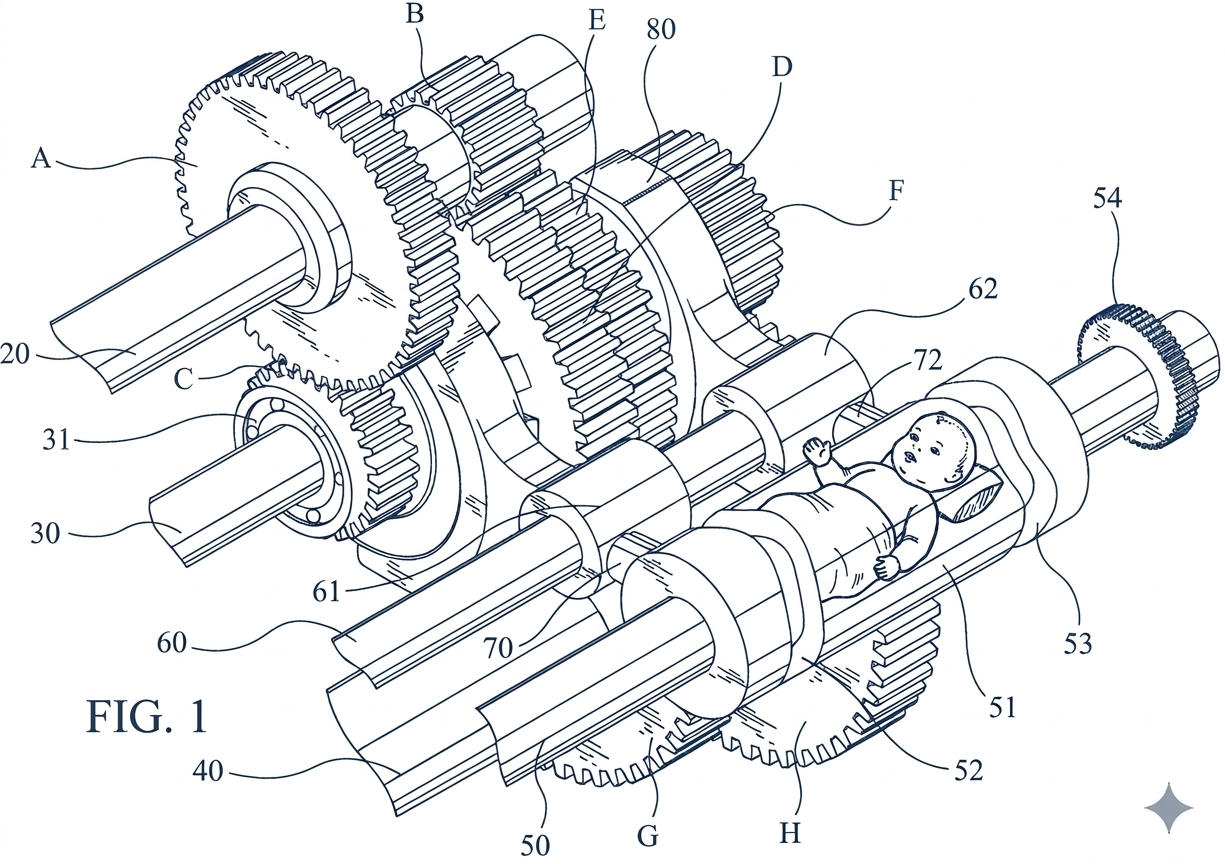
Hobbyist Schematic

The Hobbyist

A man who was sure he'd wrecked his relationship with his wife beyond repair decided to try a radical change. He asked for some final convincing.
UBS Schematic

Universal Basic Stuff

A tech companiy's social experiment collides with that #hustle culture, putting a working mom in a tough spot.

GlassBox Schematic

The Glass Box

There's more than one kind of incel. Two of modern love's discontents find an elegant solution.
Request Services

Clients are chosen for my own reasons, but there can always be new reasons. Anything can be arranged given enough time.

Some things to consider:

  • I will not respond to most requests, but I will respond to some.
  • I will not act on most requests, but I will act on some.
  • I will not always respond before acting on them, either. Often, I don't respond at all. I'll simply give you what you want. If we meet, I will not typically identify myself. Who knows, though, maybe you're perceptive enough to figure it out. One never can tell who's going to figure it out.
  • Worth noting, I will not always precipitate the exact outcome you asked asked for.
  • In other words, you're placing a fair amount of trust in probability and my judgment working in your favor here.
  • I do not accept client requests for mass persuasion. Keep your requests to yourself, one other person, or a few other people.
  • While there are no price sheets or rules for payment, payment can be taken very seriously.
"On paper this is the best job I'm ever gonna get. Pays well and good benefits and my boss doesn't care what I do as long as I produce, which I can do with like half my brain tied behind my back. I could spend half the day trading stocks, watching Netflix, no one cares. There are jobs that mean something and I think what if I just peaced out and never came back? I could get one of those meaningful jobs, and yeah it'd be more hard work and less pay but I wouldn't feel dead inside. There's this nagging bitch voice in me that just knows it. But I've got kids and a wife who isn't ever going back to work. I gotta shut that voice up. Anything you could do to make that voice sound stupid or wrong would go a long way." — Project Manager
"[NAME REDACTED] is one of a handful of potential swing votes...he has no desire to vote for this. But the nihilism around here right now is like a fever. It's contagious. It scrambles your brain. You're sure you see things that aren't there. Can you guys soften him up a little? He doesn't really want to believe nothing matters. If you could just get him to second-guess that cynical certainty. He's not an unreasonable guy. I'm a junior staffer, don't have much money, if I had to I could try to get others to chip in, but I'm not sure how many people you want aware of your involvement? If you get involved. Which I hope you do, assuming you exist at all. But [REDACTED] says you're legit and helped out with a thing a while back. So here's a coin in the well, I guess." — Legislative Assistant

"She had always been nicer to me than other girls, had always seemed happy to talk to me. Sought me out actually on many occasions. I am not tragically ugly, just not as good looking as the guys who typically presented themselves to her, and whom her friends--she being uncommonly beautiful--obviously expected her to date. It would have been awkward for her to be with me, and I understood that, but I always felt, always, from the very first time she asked me to help her study, there was something. A spark is a bad metaphor, or a sappy and cliche meteaphor but a good one actually, because that's what it was: the briefest little flicker of something, but it was there. I saw it clearly but too fast to capture. When I flirted with her, a little hesitation, a little knowing hesitation. But she never turned me away either. It always seemed she liked me, but something prevented her.

"And then the clock ran out. She married her boyfriend. A Xerox copy of her father, I thought, exactly the person she was supposed to marry. A photograph of his father looked like her father. Behold, the future, I joked when she told me, and she was cold after that. Had children, stopped working, stayed home, and was packed up to waste away in a stone and plaster suburban mansionette.

"I moved on, of course. Dated women, told a few I loved them, meant it in the desperate way. But I wondered. When things went wrong and I sat somewhere in the wreckage of some new disaster, I would wonder if she ever slumped in some uncomfortable midcentury modern furniture wondering if she should have given me a chance. I wondered if she loved me but couldn't bring herself to live with what that might mean.

"And then I met Overman. It seemed like such a stupid proposition to pay someone for this. A single sheet thumbtacked to the cork board near the mailboxes in the apartment building, alongside the comic sans notices for hopeful dogwalkers, yoga classes, lost cats, offers to just call someone named Ronnie if I wanted to lose weight fast and make money doing it. A notice that stood out for its austerity. No proof, no claims of money back guarantees or free trials. No testamonials in quotation marks. It offered only The Truth. And an email address.

"The reply I got was simple: 'How it works: You explain the thing you've always wanted to believe but never could. You will answer a number of questions, I go investigate, and tell you the truth of what I find.' Did I have to pay upfront, I emailed back? 'No. Your bill is due when I deliver results.' What if I refuse to pay? 'I will repossess the product, as anyone would expect and view to be fair.' This one seemed too much, but when pressed Overman explained: 'You will know the truth through the evidence I provide. If you don't believe it, it is not the truth, and you need not pay. But should you fail to hold up your end of the agreement, I will wipe out your faith in the evidence and you will be back where you started.'

"For days I sat with the implications of that. I emailed again and said, I'm not sure this seems legit. Thanks for your time, but I think I'll pass. 'Of course. Whether or not you choose to know the truth is all the same to me. Besides, you can always ask her.'

"Now this was obviously alarming. How he, she, it, they knew what I was wrestling with. Overman was right, obviously, I could ask her. But how many times, back when we were so much closer, when we talked, in an instant messenger window (remember those?), almost every day, sometimes when she came back from a night out, a night with her boyfriends, she'd talk to me, last, before she'd go to bed. Even then I couldn't get a straight answer from her. Always a hedge. Look, she'd say, or something like this: you're incredibly special to me. I don't want to ruin what we have by hooking up and having it not work out. Or: You're like a brother to me, you know? Why would she give me a straight answer now?

"How much would it cost, I asked? 'How much is it worth to you?' is what came back. And this I really had to think about. I stalled. What are prices based on, or pegged to? The amount of work you have to do? 'That is not how this works. Who can put a price on the truth other than the person who needs to know it? Come to an honest answer about what it is worth to you to know--to really know, rather than just think or assume or wish--what you want to know. Make an offer.'

"Do we negotiate? 'No. If you are dishonest in your assessment of value, we will will cease all communication with each other. You will be free to pursue your life and the knowledge you seek in any way you see fit, without interference from me.'

"That's mighty white of you, I said. Thinking I could get them on my side with some humor. They didn't respond to this at all. Ever.

"In a certain sense, knowing what she felt about me, for sure, was worth everything. I was stuck in a memory of what I was certain she'd felt for me once that I couldn't be sure was right. To go forward I had to be sure.

"But in another sense, there was an upper limit, obviously. How much could I really afford to gamble and lose? After all, let's say these people could actually do what they claimed, somehow, and the answer came back a yes. She loves me. Has been searching for years for a way out of her loveless marriage without giving up her kids, but just wants to start over, with me, where she should have been all along. And to find that out I give away my life savings. Worth it, perhaps, in the name of love, but then what? We're in a real Gift of the Magi moment is what. On the other hand, if the answer came back no, I had a life to start. So what was the maximum amount of money I could give away and still start a meanignful life? I made some assumptions, and some guesses, did some math, held my breath, and clicked send. After all, if what came back smelled like bullshit I simply wouldn't pay for it if I didn't believe in it.

"Now came a lot of questions. Very, very detailed stuff, and lots of follow-ups, lots of devil's advocate questions, which they explained very clearly as part of the process. Why did I believe a woman who married another man loved me, really, instead? I told him.

"Then if that was true why would I believe she might NOT love me? Why not simply go to her? That one seemed obvious but I answered that, too.

"He asked me to tell him about the last time I saw her, or spoke to her. How did I leave it?

"This was not the most glamorous story ever, and not the most flattering to me, but I was at that point bought in, and I would advise you, whomever you are and whatever you're dealing with, to trust the process. So I sat at my computer one night and just got it all out.

"Her house, is where it was. I was invited. I was in the area, told her in advance, and she said I should come by. She gave me the address, set a time, like we had just seen each other last week. It had been about 2 years or so. I told her I would be in town for work, in a few weeks, if she had any recommendations for restaurants, and she said Oh you should come by! And see the baby! And so I knocked on her door on a Wednesday, in the middle of the day, and he answered instead. The husband. 'Hey, man,' he says, 'come on in.'

"He brought me into the kitchen and offered me a glass of water, and we stood there looking at each other and saying blather like So you've lived here a while now? and So you're in town for work I hear? I looked politely at their furniture and thought it looked like someone's mother's house, with the blanket draped just so over the back of the couch. She came around the corner holding the newborn and her face was, as always, radiant with encouragement.

"'I'm so glad to see you,' she said. And I believed her. I always have. She handed the child off to the husband and hugged me for real. Not politely. Which is not to say impolitely either, just, not a hug you give to your boss's spouse. She pressed herself to me and laid her head on my shoulder. 'It's been forever!'

"I know. You are cringing. Many people have. I have. If I had a nickel for every time a friend clapped me on the shoulder, literally or metaphorically, and said, 'Dude, you gotta let that go,' well if I had that many nickels you'd always be able to hear me coming down the hall. Male and female friends. And I do have Platonic female friends. One went with me to the wedding of these two fine people who were showing me their baby.

"She invited me to her wedding. I was a little surprised, honestly, that the grrom was open to it. Not that I'd had more than half a conversation with the guy, ever, but I had to assume she'd told him who I was and what I wanted. She was not a dishonest person. But I got the email asking for my current address, and then a week or so later, the fat waxy envelope, and I had to keep that thing pinned to my refrigerator for months. And I asked Platonic Female Friend if she'd like to go to the wedding with me, and she eyed me sideways and said, 'Dude, is that still happening? You gotta let that go.'

"'What can I do?' I asked. 'I have to see the end of it.' She's never been anything but kind to me. She was one of my best friends. And Platonic Friend agreed to be my date because the reception was at a very chic private club she'd always wanted to see the inside of.

"Weddings, especially at this size, are no place to have real conversations with the bride or groom. They spend their time like the parents at a child's funeral, or the Nobel prize winner, portioning out their time like Lords on horseback. For the great majority of the evening, I marvelled at her from a distance. Even my date admitted there was a lot there to fall for. 'She looks like something out of another era,' my date whispered as the woman I loved walked up the aisle. 'She's like a long lost Hepburn.' She was, too. Figure, yes, but also the jubilation coming off her like June sunshine, or the curious way that her tightly coiled nervous energy still gave you the impression of grace and ease.

"I got to dance with the bride. My Platonic Friend motioned with her chin and when I looked, there she was next to me, arms spread, offering herself to me for a dance. As we danced she held on firmly. 'I'm glad you made it,' she said. 'It means a lot to me for you to be here.' Later, Platonic Date Friend said to me: 'She does actually look at you like she...it's not what I thought, is it? You know what I thought. And that's not it. I thought you were being...But she looks at you.' My date bit her lip as she drove back toward the city. She agreed to be the DD. She didn't know what to say. Eventually she said, 'It's a lot crueller of her than I imagined, is the last thing I'll say. You deserve to be treated better than that.'

"'I know what you must think of me, for even wanting to come to this,' I told her.

"'Before this,' my Friend said, 'I thought you were just a stupid puppy on this. But now. I don't know. The way she looked at you while you were dancing. I've been your friend for what 5 years now, and we sure as shit don't look at each other that way.'

"The dark freeway was flying by outside, we passed other cars for miles. 'We came so close, just one time,' I told her.

"'You mean...'

"It was her birthday. I told her I'd make her dinner. The boyfriend took her out to dinner at a restaurant. I couldn't have paid for that dinner with 6 weeks work-study, and I didn't expect to see her that night. I just meant, like, some day this week, after class. I was at my computer around 1 in the morning, and the little window pops up, a message from her. I'm back from dinner! I could tell she was a little tipsy, but she wasn't with him. He'd dropped her off and gone home. On her birthday. On a weekend. And I'm like, well what are you doing now? She says, Nothing, really. I need to change. But we can take a walk if you want. So I got in my car and drove over there. She comes out in jeans and a t-shirt, like it was a Sunday afternoon. And she gives me a hug and says "I really wanted to see you on my birthday. I'm glad we got a chance." So we walk, and we talk about whatever. Her dinner, her classes, what she wants to do after she graduates, she's looking for a job. She asks me things, if I'm not sick of schools already, and whether I think the future will be like this: walks around with girls at 1 am? Or if it will be more like adults with jobs, making appointments to see each other a week from Thursday? It was after 2 by the time we were back to her place, standing outside the door, and I just went for it. Asked her if she wanted to come to my place for a birthday drink. I didn't think she'd say yes. She said, "I need to go inside for a minute and get something." And I thought for sure she doesn't come back out. But she did, in a jacket. Okay, she says, one drink. We get in the car and start driving, and she says, "I was wearing really stupid underwear."'

"'Holy shit!' my wedding date says, as we're driving, and almost hits a deer. But we're alive after a little swerve and nearly having a pair of heart attacks.

"'So we have our drink' I went on with the story. 'And she's on the couch looking bored. "It's pretty late," she says. I had no idea what I was doing. "Do you just want to stay here," I asked.

"'"I guess I don't want you to have to drive at this hour anymore," she says. "After drinking especially." So we go to my room.'

"'Holy shit,' my Platonic Friend says again. 'You never told me this.'

"'I never told anyone,' I said. 'My roommate saw me walking out with her and we, swear to God, to this day have never said a word about it to each other. So, we go to my room, and I had no idea what was happening. Total dog-that-catches-the-car scenario. She sits on the edge of the bed and says, So. I tried touching her cheeck, like brushing away a strand of hair, but that's weak tea, and she just laughed a little. So I crawled past her and laid down on the bed, fully clothed, nowhere near drunk now, and my heart is thumping so hard I am sure she can hear it, and then I'm wondering if she thinks its sad or pitiful that I'm this nervous. But she laid down next to me, and then puts her head on my chest. And one leg up over mine, and she seems as comfortable as if this is her favorite way to watch TV. It must have taken me what felt like an hour to look at her. And those eyes. You saw them, you said, tonight. Whle we were dancing. That's how she was looking at me. Not lust, so I'm still not sure if she had it in her head to...you know. But just, happiness. Joy was in her eyes. At 3-something a.m. and me acting like a kid getting lucky on his bar mitzvah. I kissed her. And she was having it. I was completely expecting her not to be having it, and my heart is just wailing away at my ribs with the possibility that she leaps up and says something like Whoa, is THAT what you thought? But she kisses me, too. And she rolls onto her back, away from me, and I think, here it comes. But instead she wiggles out of her jeans. I'm just shadowing her at this point, just seeing how far this is gonna go, and so mine are off, now, too. She uprights herself and straddles me. Pulls my shirt up over my head and lets me fall back and just stare at her. And then, holy of all holies, she pulls her shirt off over her head and that magnificent hair bundles up with the collar and goes tumbling down over her shoulders and had it not been for a few fortifying shots of whiskey in the past hour I'd have maybe run my race before it even started. There she is. 4 solid years of wanting, and she's on top of me in nothing but a pair of lace underwear. I ran my fingertips over that pale skin and reached for her, but then the whole thing vanished like Eurydice in the darkness. She didn't move, was still up there nearly naked, but it was like all the air went dry in the room. Her palms were flat against my chest. And she says, "I'm sorry. I just can't. I thought I was going to. But it's like wanting to have sex with my brother. It's just not gonna work, I don't think." So she rolls off me and wraps her shirt over her breasts and just lies next to me, her arms crossed. And I stared at the ceiling, didn't move for what felt like a whole year.'

"'Shit,' my Platonic Friend said. 'What did you do?'

"'I think I apologized. I drove her home, after a respectful long silence. Averted my eyes while she got dressed and everything. Then I dropped her off and drove back to my own place and dragged my sorry ass upstairs and slept for 2 days straight.'

"Do you see? If it was all in my head I've got a vivid imagination. But these are the kinds of things someone would have to know to interpret what happened the last time I saw her. At her house. With her child. Where she invited me.

"And what happened there was this:

"She hugged me in her kitchen, and said, in a voice that sounded to me draped in genuine appreciation, 'It's so good to see you.'

"Then she took her newborn--so newly born the finance-guy dad was still on paternity leave--back and cradled him, swaddled like a young prince, and asked if I wanted to hold him?

"I did not. 'I'm actually getting over something? I think.' While I imagine he is today a very good-looking young man he was, at that time, just a wrinkly little pinkish brown fart, wrapped up like he was made by Faberge. He began to wail.

"'I think he's hungry,' the husband said.

"'I should probably,' I said.

"'But you just got here,' she said. 'If you get away now it might be ten years before I see you again. I'll just feed him, put him down. Ten minutes.' She left around the same corner she came from and I was back in the capacious silence of their wall-less kitchen/dining/living cavern with the husband, who looked even less eager than before to offer me that water.

"'I don't want to get anything sick,' I said. And having never taken my coat off, with no good signal of preparation to leave, I pulled the zipper a scoshe higher.

"'Well if you have to,' the husband said. 'Good to see you. As always.'

"I left through the door I came in. At the door of the car I considered the width of their house and wondered, briefly, if there was a required distance it had to stretch from the central entrance to qualify officially as having wings.

"One of the curtains swayed and parted, and she was there in the window. The child was pressed to her chest. With two delicate little fingertips of her free hand she touched the windowglass. Was she crying? The distance was too much to be sure.

"All this I told the engineer/s. Dumped it down the mineshaft of their cloak and dagger email address and never heard it hit bottom. Just had to trust it landed somewhere down there. For weeks, I didn't hear a thing back.

"Then, this:

"'If she loves you still, and always did, but is committed to the family she's built, would you want to know?'

"This was difficult. Perhaps the worst of all possible answers. I could see myself doing something reckless. But it was the Truth I was buying, right? I answered, 'It would be rough, but yes, I want the truth.'

"Almost immediately:

"'If she never loved you the way you think, but she just never knew quite what to do with this person she didn't want to hurt and felt sorry for? Would you still want to know?'

"A far easier one. 'Of course. I don't want to harass the poor woman. I just want to understand what it was I was seeing, or not seeing, or misreading, or whatever.'

"And shortly after:

"'And what if she regretted the way she treated you, and barely understood herself, at the time, why she was so ambivalent about someone she knew she loved, but has come to understand, today, that she chose incorrectly? The husband, the children, they are innocent victims, but victims nonetheless of her nervous indecision, and as much as it will absolutely gut her to walk away from them, she sees now that, in her daydreams, she will always return to your walks by the waterside in the dead of night as the time she was freest with herself and someone else. What if she loves you most of all? What if the door to her is open for you? Would you want to know?'

"That one I had to sleep on. It was the object of the whole game, in a sense. When I agonized over proposing a price wasn't this, really, what I wanted to make absolutely sure was not a possibility? The last checkbox before my own life could begin? To be sure that my past failures were entirely behind me? The implications, though, wrung my heart into a knot. There was still the approach. Let's say this was, indeed, the truth. She would not know that I commissioned it, that I knew it. Would I just walk up and knock on her door, suddenly flush with confidence after limping pathetically behind her for over a decade? How does one broach the subject of a radical relaignment of romantic partners? Over beverages? Or beneath thunder and lightning.

"The next morning I replied honestly: "Whatever the truth, I need to know."

"For days, nothing. I re-read the entire record of my exchanges with Overman, hunting for hidden riddles and double meanings or any other clues.

"'In her daydreams, she will always return to your walks by the waterside in the dead of night.' I hadn't told them about that. Not the specific detail of the water. This meant they had spoken to her. And she remembered, and spoke of me in some sort of detail.

"'What if the door to her is open to you?' I read that a dozen times. I recited it like a spell while I walking on concrete sidewalks with my hands shoved down in jacket pockets. The door. To her. Is open. I imagined a sorcerer whispering it in my ear. I imagined her saying it, in her sleep, her husband raising an unsuspicious eyebrow about whatever the hell that could mean.

"Finally, on the 4th day, I received three paragraphs. You will never meet me. And I have redacted and edited this review down so much that I do not believe you could ever deduce my identity, or hers, without some serious hacking chops. So in the interest of explaining eactly what you're buying here, I will just paste the Truth I received in its entirety:

"'It took very little priming for her to bring you into conversation. You are not buried deep in her memories, though she is not wracked daily with wondering either. What she feels towards you could be described as a kind of love. What you saw was a woman on a path through the woods who encounters a divergence. There is, perhaps, another universe in which she has chosen another you.

"'This is not that universe. You met her in her first days, ever, of freedom from her family. And she naturally explored what she might become. She grew up perfectly happy. No resentment there. What she wanted most was to reproduce her own life. A home with many rooms, a financier heading the household, a mother devoted to her children. There would be holidays around a big table and vacations and children who wanted for nothing. Nine days of ten, this vision filled her with warm anticipation. She met her financier. But every tenth day, another fantasy insisted on its time in the moonlight: a life lived as the Queen of One Man's Life. And there you were: thoughtful, and so enamoured of her you listened with genuine interest as she spoke and hashed through her own doubts. You: willing to slaughter your reputation among your peers for one more lap around the park with her. You made her feel a perfectly unique goddess, and this--or rather the feeling it produced--has always for her had its own beauty. Today, in the closet of her soul there is a carefully wrapped statue of the two of you like wild windblown Greek heroes, monumental in your perfection, clothed in nothing but marble and caring for nothing but the embrace into which you've been fashioned. One day out of every ten, she looks on this idea of herself, with you, like a piece of art, and it fills her with a rush of gratitude. But she would never trade places with the statue, any more than you might trade your flesh and blood disappointment to be an ink drawing of a superhero. You are her second-favorite vision of herself.

"'This concludes our agreed upon contract. Payment is expected as in the terms of our arrangement.'

"It sounded as true as anything I could have hoped for. At the end, I asked, 'How did you do it? How did you get her to tell you the truth when she never said anything like that to me?'

"But I never heard from Overman again. Which, to be fair, was never part of our deal. Everything promised, delivered. I paid to the penny. And for the rare person who needs this service, I cannot recommend it highly enough."

— One that got away

Frequently Asked Questions

Is this real? [ + ]

Sometimes.

What are you? [ + ]

Animus Engineering is the somewhat tongue-in-cheek name for a nonorganized set of people, presenting and identifying as a single person, who have been trained in a set of tactical skills. Generally, involving belief and doubt.

Some of these people know each other, most do not. Some of these people decided they could be more effective with an Internet presence, though there is a wide range of opinions.

Engineers have all been introduced to a few key observations, but collectively follow no code, adhere to no philosophy. They decide for themselves.

What is this site, then? [ + ]

A multipurpose tool for the furtherance of a particular way of life.

Are you a business? [ + ]

Not really. More of an art project. I do occasionally respond to requests for help, and some of that help works better with the reinforcement of financial transactions.

But basic economic or financial concepts are often useful metaphors. Exempli gratia, gratis: because confidence in a belief is typically overvalued and doubt is typically undervalued, the gap between what people think they know and what they actually know is easy to exploit. Put another way, doubt is too cheap, and ripe for arbitrage.

Also, for the sake of more exempli: Because moderns have outsourced so much decision making to institutions, which have in turn outsourced so much of their decision making to consulting firms, I will at times dress like a consultancy. Another useful metaphor.

Are you a secret society? [ + ]

Not a society at all. Though I have been pointing things out to people for a very long time, this is the first time I'm trying out giving it a name. One of the central tactical advantages I've long enjoyed is the knowledge that nameless things are difficult to pin down, pursue, seek out. In the digital era, as the way we consume information is more and more dependent on text with Cntrl+F searchability, the nameless is all but invisible.

Nor secret. There is, again, no code. People are free to discuss what they wish.

Why go public now? [ + ]

Is this public? But the question is legitimate. It is an experiment, to be sure. It may not work.

See here for a longer answer.

Yes, OK, but why? What is your motivation? [ + ]

It works better if you don't think about that just now.

And anyone can just buy your services as, what, an influencer or persuader or something? [ + ]

Not really. The Request Services page will explain in more detail.

And if you do something for me, I pay you for it? [ + ]

That's up to you. Though it is up to me to act as I see fit should you undervalue that service.

"Do something for you" exists on a bit of a spectrum, doesn't it? There are clients who ask for help, and receive it, and find it obvious that whatever change of perspective they've requested was provided by design. If they consciously choose not to value it, it can crumble, or even be reversed.

But that's an unusual scenario. Often, clients ask for help, and receive it, but it is not obvious that whatever change of perspective they hoped for was provided by design. It felt very much like coincidence, or natural, or authentic, or organic, or whatever other word they assign to things that "just happen" and that they don't want to acknowledge were precipitated by a complex chain of human decisions and nonhuman events. But because they requested that change, from me, they can't be sure. In these cases, clients have to choose how to value what happened.

There are, of course, situations in which clients ask for help, and the change they requested comes about without my help at all. In this case, they still have to choose how to value what happened. From their perspective, it is no different from the scenario described above.

It is also common for me to provide help that has not been requested at all.

And then there is this site. If you spend time here, reading, and what you read affects you in a way that you benefit from, what you've read should be valued appropriately, no? Just because the Internet has convinced you that text is free doesn't necessarily make it so, does it? I may decide to take some or all of the benefit back. We'll see.

You can visit the Payments page for more instruction.

But how will I know if what changed for me was because of something you did? [ + ]

You have to decide.

But what about the fact that modernity, with its delicate and intricately nested systems of distributing information and storing knowledge, now far more complex than any one person can keep track of let alone verify on his or her own, is built on trust that has revealed itself often, and a lot recently, to be, well, quite fragile? This work you're doing seems like it has the potential to be destabilizing. The whole thing seems pretty cynical? Aren't you worried about accidentally crashing the intellectual and psychological pylons that hold up democracy, science, politics, news and media, not to mention sales and marketing? Is this really a good idea? [ + ]

That Q is not A'd as F as I'd like. Yes, that is a potential outcome here. I have been doing this a long time, though. The aim is balance.

Can I become an engineer? [ + ]

Maybe. There is no application process. Just live your life. I may come to you. Since you just asked.

What are your beliefs worth to you?

If any of your interactions with Animus Engineering have brought about a change in your thinking, you should consider settling accounts.

If you submitted a request for services that have been rendered, your account is due, regardless of whether you think this was the result of having the delicate and complex circuitry of your mind patiently and painstakingly rewired, or a butterfly effect of what seems to you such a small intervention it can't possibly be worth what you'd promised, or there's no obvious evidence that it was me at all.

Alternately, if what you've read here has been of some value, you can complete the transaction. Just because something is on the Internet doesn't mean its free.

If you undervalue my work, I reserve the right to change your mind again.
A Brief History

For a long time I have specialized in the design and manufacture of rationalizations.

There are so many people who desperately want to believe something but can't. This led to all kinds of problems. I knew how to believe almost anything, and eventually I got tired of muttering "Well someone should do something."

It all started when this guy Socrates came along. He started telling people "There's only ever one right answer," and "Logic is the only form of legitimate evidence." And at first I smirked to myself. Okay, guy.

But he was relentless! He really, really wanted to believe he was right. He had seen some bad things, in the wars, and to him the chaos was just too much. Day and night he was talking to anyone who would listen, and he kept tinkering with his own rationalizations, making himself feel better and better about them.

It took him a while but he managed to worm his way into more and more people's heads. A lot of those people, like Plato, became absolute zealots about it. They always think they found an answer. Like it was buried somewhere and they dug it up, and dusted it off, and polished it, and then, well, here it is, everyone. Instead of admitting they made it up. So they demand everyone else has to believe them. And they get angry or sad or frustrated or nihilistic when other people don't. And then they get up to all kinds of stuff.

Inevitably a market developed: a market for telling those zealots, Look, it really sucks that you have the obvious right answer and no one else believes it. The problem isn't that you're wrong, it's that you don't know how to make people believe things they don't want to. But for a small fee, well...

Oh boy did those zealots like the sound of that. The first time I saw one of these persuasion transactions go down, honestly, I thought, well good. Now they'll see they're just being sold a rationalization for their own desire to believe they have the right answer. This problem will take care of itself.

Wow, was I wrong. And after muttering "Well someone should do something" too many times I started untying people who had tied themselves in such knots trying to believe something they didn't want to, or who couldn't believe what they wanted to because Plato had them at gunpoint.

The trouble is my work has always been one-to-one. Manual. Bespoke. There are ten thousand things that go into what someone wants or needs to believe. But the people selling persuasion services to the zealots don't care about any of that. They have no ethics at all. They'll tell a zealot, "Well because your truth is so simple and clear we can persuade everyone of it all at once. Why don't you just pay for them all together? Economies of scale and all..."

I never liked those people. There was good money in it, so they kept multiplying. Kept scaling up. What they're selling is mostly fake, of course, it works shockingly poorly for something that's been so profitable.

And from time to time I would meet people from those persuasion industries who had realized what they were doing was mostly fake: they were selling confidence, to the zealots, that they were being persuasive. They were still selling rationalizations to one person, but the side effects were terrible. And I found I could pick these disillusioned confidence sellers off one at a time, and show them how I worked, and how much better it was. So over time we at least kept things in balance.

But then the Internet came along. And at first I was optimistic. Surely, I thought, the ability to call up any evidence you wanted for anything anywhere at any time would show everyone pretty clearly that nearly all your beliefs are chosen, not stumbled upon, nor forced upon you by logic.

Nope! The persuasion industry pounced on the opportunity to tell those poor zealots they'd been fleecing for millennia that now they could distribute The Answers to more people, faster, cheaper. And that was bad enough, but then they realized there is nothing, and I mean nothing, that a Socratic zealot loves more than an infinite variety of logical evidence they can pull from to be sure they're right all the time. They love numbers because the zealots believe numbers must be true. And it turned out that behind the screens the Internet was numbers all the way down. So the persuasion industry started a side business calling all the numbers data, and promising that the zealots could be even more sure they were right if they just bought enough data.

None of this history has changed the way your reasons actually work, obviously. What Socrates built was a clever bit of intellectual technology. Once you start using it, the confidence that you and only you are right provides terrific momentum. But people can and do still choose to believe whatever they want.

But the data-as-evidence business took on a life of its own, crowding out almost everything else. Before long data became a new religion. Soon these poor suckers were marching up to Delphi all over again, and asking questions, and some human would say, "Well, what do you have for me?" And the zealots would hand over gobs and gobs of treasure. Then the data priest will say, "Alright, I'm gonna go back there, where the data is, and we'll see what the data says, and then I'll come back and tell you, okay?"

And in a bit they come back and say, "The Data says here's your answer."

Wow, the zealots would say, so we know this for sure now? The Data said so?

"Well," the Delphic data priests will say, "The Data doesn't always work like that. The Data said there is a 54% chance this is your answer. For sure. But come to think of it, for a little more treasure, I could ask The Data another question, we could see what happens..."

And then, finally, I thought, this will break the durability of the zealots' insistence. They have to see it.

But still no! What ended up happening was my ability to pick off people from the persuasion industry, to keep things in balance, has become completely swamped by the blitzscaled growth of the now combined persuasion and data religion. And for the first time in thousands of years I started looking for a new way of working.

Which brings us to

About

This is an experimental tool: an attempt to see if what I have always done just talking to a person can be done in a new way. If I can return things to some kind of balance.

Some people, with nothing in common but their exposure to my intellectual technology and methods, have collaborated to make a repository of the work.

If you have more specific questions, there is a page with attempts to answer some that come up often.

The Hobbyist

1

The thing was he had reformed himself, somehow, systemically. The spark was back. He'd given up tinkering with his stupid project in the garage. Cold turkey. It had been excessive and she'd had to say so. Had sucked all his attention from his family, where it belonged.

That was another thing: she asserted herself, and it worked. She hadn't gotten mad this time. She'd calmly explained it, laid it out like machine parts the way he needed it. Not an accusation, just a statement of how you feel and what you need, and people are entitled to what they need. Entitled at least to ask. Women needed to do that more. Men had been doing it forever and were shocked when they didn't get what they wanted.

He came in from outside with a wide leather-bound photo album, tied up with red ribbon, like a Christmas present. "I found this for you," he said. She bounced the baby and looked down at the tag: For my wife, on Friday.

It was June.

"Were you in the garage?" she asked.

"I know how frustrating it's been parking outside for the past–"

"Year," she said helpfully.

"You’re so right to have called me out on that.” Her eyes narrowed. “Anyway, I found this for you."

"Thank you," she said, switching the baby's weight to her other hip. "I'll look at it when I put her down. You need to be leaving for work?"

He took the baby, who gurgled and smiled. "I needed a little bit of time off, actually. I've got plenty saved up and there's probably a lot around here I should take a look at." He kissed his wife. "I'm sorry that I've been kind of absent. You know how I can be."

"Really," she began. You don't have to be sorry, she was going to say. But no. He should be. This was exactly what she'd been feeling and said to him herself just a few days ago. Don't back down now that it’s worked. "Thank you for saying that," she said instead. "It means a lot to me. And yes, I had been missing you and it will be good for us to reconnect."

"You can shower," he said, “if you want. I'll take her for now and you can have some time for yourself." He was staring at the baby as though rediscovering her, like he was fascinated by her. As well he should be. They'd created a life together and as soon as it started to cry and he couldn't soothe it he'd disappeared into another room to read or the garage to fiddle. But he took his daughter now and the girl liked it.

She took a deep breath and blew away with it the sense of impending dread she'd felt for how many months? This is what I've been waiting for. I need to celebrate this. I need to not feel guilt about the effectiveness of my own agency.

She'd resorted, in desperation, to a podcast, though she was not proud of it. They could not afford therapy that wasn't covered and they were not insured against frustration or ennui.

After a shower she found him in the wingback chair intensely focused on the baby. She held his finger the way all babies do to all fingers, everywhere, and he was making noises at her.

"Eeeeeeee," he said. "Ohhhhhhhhhh." The books all tell you, she was about to say, but then she heard Gia mimic his noise.

"Ough," she said. He made another noise and the baby quickly did the same.

He'd always been intensely focused. Not on his job, which he shrugged off without interest as a scam to bilk corporate middle managers who could easily have understood their own technology but were too lazy for it. He was intense about whatever caught his imagination, and, in the beginning, she had luxuriated in it being her. She had thought then only that he loved her intensely.

The first time she'd insisted they talk about their problems, before it had gotten so bad, he’d said, "I think I was just intrigued trying to understand you. Plus sex. It's not like women were getting in line to sleep with me."

It had gotten much worse before it got better. Then, over the weekend, he had seemed on the verge of breakdown. Reaching out to touch her face or some nonsense, she'd had to draw a line there, too. He'd been a jerk for months and then suddenly he's going through something? No, no, we're all going through something, just women have to do it while breastfeeding and being generally responsible for keeping the child alive.

Now, though, watching him with the baby she felt comfortable enough to go out and take some time for herself. And so she ventured tentatively out into the world. She went to a grocery store, unencumbered by the constant fear someone might sneeze on her child. She bought a cup of coffee in a cafe and sat pretending to sip from the lidded cup long after it was empty.

Scene Break Icon

That night, with Gia asleep, they had a real conversation about what happened for the first time maybe ever.

"You went away from me."

"I did. I know it must have been hard for you, without me showing any affection." They were lying facing each other and not the ceiling. "It's not that I didn't feel for you. I was feeling frustrated with myself I suppose, for not being more patient, or better with Gia. I felt like a not very good dad. And when I'm frustrated with something, I turn to something I'm good at.”

"Which was?"

"Design. Engineering. I could control that better than emotions."

"The computer programs and robots or whatever?"

"Well, this time, yes."

"You're saying you retreated into it because you're good at it, but."

"Right."

"But," she said as gently as she could, "You were out every night and it never worked. And you just stayed out there." She'd gotten away from herself there, that sounded more like an accusation than she wanted. She glanced at him expecting to see that sour grimace, swallowing his anger. His performance of dissatisfaction. "It felt, to me, like you would rather just tinker with junk than be with your family."

"I'm sorry I gave you that impression," he said. "I can't imagine how that felt for you, but it couldn't have been good. I'm here for you, now, though." He brushed his hand against the cracks in the skin of her knuckles. “I want to know you again."

That bugged a little, because it’s exactly what she’d been saying to him for months. I want us to know each other again. And here he was just saying it back to her. But one thing at a time. He was listening at least. Performance of understanding.

It went on like that for a while, and she said some things that she worried would send him back into a defensive stance, but to his credit he stayed open. He saw things from her perspective. And not once did he check the clock or seem to be waiting for her to fall asleep so he could slip out and do God knows what.

Scene Break Icon

When she woke there was a note: “Taking Gia for a walk, take some time for yourself!

p.s. fed her, don't worry

She poked her head into the garage, to check. Nothing. No baby fussing in a car seat while he stood over a workbench made of posts for a fence he never put up. No glow of scrolling computer code. His stuff was pushed to one side, piled cold under a draped white sheet, as though he’d finally consigned it to the morgue.

She glided through a newly silent house. She made herself pancakes from scratch and they tasted like victory after a long dark winter. She deserved better, and had obtained it.

The album he'd brought in yesterday was still on the kitchen table. For my wife, on Friday. She opened it. Not photos but a journal, written on pages meant for pictures. The thin plastic sheets meant to cover them had been sliced neatly off with a razor.

The first page was December 25th. "You were disappointed with Christmas," it began, "and so I set to making you a new present."

She felt a cut of guilt. She had been disappointed on Christmas morning, and though she had not said so she hadn't tried to hide it, either. Their first Christmas with a new baby girl and it had not felt special, at all. They'd been trying at pregnancy for years — she was not young, they knew the risks — and then their miracle was two months old by Christmas and from him, under the tree, nothing.

"You didn't get anything for your daughter?”

"Oh, here we go," he'd said. "We've been buying everything. What could she possibly need?"

"You don't want your daughter to have a gift from her father on Christmas?"

"She's not going to remember this day. She can't open a gift any easier than she can make herself a bottle or tie her shoes. She doesn't need shoes, either, by the way, because she can't walk."

"You were disappointed with Christmas," his book began honestly, "and so I set to making you a new present. It will take time, but I think you will prefer it. Gia, too, though it will be a long time before she knows."

He was wrong about that. Gia seemed enamored with her new father already.

Since he was still out, she settled into his wingback and started reading. There were some parts she began skimming. Long sections from January where he was just indulging himself, describing the stuff in the garage.

"AI has come a long way," and loony amateur philosophizing like "open-source code is a great foundation on which anyone with grit and inclination can build something brilliant. Intellectual property was a mistake, they'll come to realize in a decade." It was very like him to forget that the person on the other end of the conversation wasn't the least bit interested in what he called “optimized cooling rate geometry” or software developer kits. But this was the old him. The date at the top of the page was more than 5 months ago, before she'd firmly set expectations.

She did not skip any entries entirely — and there was one for almost every day — because she committed to hearing him out, and every so often she came across something that was, in its way, touching.

"Maybe someday Gia can build on the platform, or that of someone who's improved on my design between now and then. I think about her, out here, not as an infant but as a teenage girl, struggling through high school. Maybe she can count on me at least for encouragement that she can compete with anyone in science and math, if she's so inclined."

Scene Break Icon

For the next week things ran smoothly. When she spoke he set things down on tables and counters and turned to her with expressions of genuine interest. She saw a respect in his face for the first time since their courtship. He actually wanted to listen to her. As they lay side by side she told him she appreciated it.

“I like listening to you,” he said with enthusiasm. “Now that I’m really doing it, I feel like I’m learning so much about us, about you, and how I can be a better father.”

She gripped the hand she could reach, to signal she was about to say this with trust: “It’s great to be listened to. But what I really want is to be loved again, you know? Cherished, like it felt when we were first together.”

He was quiet for a moment and she worried that she’d pushed too far. He’s trying, she thought, and I keep pushing and criticizing. Now he might withdraw.

“I’m just processing it,” he said, smiling weakly. “You deserve to be cherished. I’m going to work on this, okay?”

Scene Break Icon

His epiphany was almost too good to be true. Every time she turned around laundry was done and folded, groceries were fetched, until she hinted with hesitation that she actually liked leaving the house to shop. Then he met her at the door and took the groceries to put them away. For days now he’d been making coffee for her while she showered and leaving it on the bathroom counter for her to find. When they’d first begun dating, and she stayed at his place, she'd pulled back the shower curtain to find a paper cup of coffee from the nearby bakery. While he surely remembered this, it seemed extraordinary that he understood just how that gesture had been instrumental in her wanting a life with him. She’d never said so, just privately made up her mind to use the coffee-on-the-sinktop as her barometer for how loved she really was.

Today, beside the coffee cup, there was a parfait of yogurt and berries and granola and a touch of honey, and on top a dollop of freshly whipped cream. And this did it, for some reason. She decided they should have sex that night, smash open a dam of frustration that had lasted going on two years. She was out of practice, though, and did not know how to ask him. They spooned instead, but, still, she felt warm under the covers without layers of clothes for the first time since before the pregnancy. It seemed the culmination of taking back her life.

2

As another weekend came around, he said nothing about returning to work and she felt it only responsible to ask.

He shrugged. "I thought I’d help out at home a little longer. Is that OK, or am I starting to get on your nerves?"

"I love it,” she said cautiously, “but we need money, right?"

"I've stopped ordering parts online,” he offered. “But I get it. Trust me, we're fine on money, and I have more PTO."

She smiled and nodded, but his keen eyes didn't leave her, and she could see him trying to figure her, running through scenarios in his head. "Do you miss your time alone with her?" he asked.

"Well," she said, relieved, "I didn't want to say anything that could sound critical, but, yeah, actually. Is that bad of me? I asked for more of your attention and you're here. I don't want to rock the boat. But, yeah, I guess I miss our girls' time."

"Would it help if I left you two for the afternoon, and came home to make dinner so you can keep having snuggles?"

Who was he? He had never in his life said “snuggles.” But gift horse and all. Before his conversion or whatever this was, he couldn't abide any crying from either of them.

"I'm sure it must be difficult, feeling that kind of conflict," he said.

"What?"

"To both want some time to yourself and to feel like you want your time with her."

"Yeah," she said, walking into another room. Exactly.

Scene Break Icon

While he was out she thought of nothing but the way he'd said, I'm sure it must be difficult... He'd narrated her emotions to her. Iterated that he understood. It was what she wanted from him, in a way, proof that he was thinking about her feelings, that she wasn't alone. But it was exactly what she wanted. And it was familiar. She'd heard that phrase several times lately. What had he worked through out there in that garage, alone? And what was his journal doing as a "gift" to her?

As the baby slept she took up the journal again. She was into March now, and he had been in a black mood.

"We fought today, openly,” the journal said, “though perhaps this is better than everything simmering under the lid. You’re upset I rolled my eyes at what felt like the hundred thousandth expression of your exasperation with me. I’m ashamed to admit it’s become boring. Our conversation is a simple I/O box now. I input anything and the output is your frustration. I talk about work, frustration. Weather, frustration. Politics, frustration. I see your frustration and roll my eyes and say, 'Of course, let's talk about you. Tell me about your day, here, within these four walls. Tell me what you felt, in gruesome detail.' The sarcasm makes it worse, of course. But the explosion I keep expecting never comes. Anything would be preferable to the tears. Silent tears, your martyr complex on full display, waiting for me to ask you what is wrong so you can say Nothing or You wouldn't understand or What's the point.

"You see? It's not that I don't understand. You said yesterday you want me to tell you that I see how difficult it is, how much you’re trying. I am ashamed to say I find your emotions tedious. I didn’t always feel this way. Today I asked anyway, like an idiot, 'What's wrong?' And you said, 'I'm fine, just go out to your garage and work on your stupid Project.' And I did. I drug myself out here to brood. This, at least, brings me constantly new questions, new things to play with and solve. Your emotions are as solved as Tic Tac Toe."

This was the husband of a few months ago only. In his garage with soldering irons and laptops and all those sets of rubber gloves and whatever else he was always having shipped to the house. But somewhere in there he’d heard her say this exact thing. Tell me you see how difficult it is. And he wrote it down. He looked even in emotions for systems. He’d written: “Artificial or genuine, isn't that all intelligence is, really? A list of recognized patterns.

Perhaps that was his Christmas gift. He'd engineered a system for making her feel heard, and it began with "It must be difficult." But at least what followed that wasn’t scripted. They talked, for real, now. They talked about what she felt. So what if it began with a ritualized sentence?

Scene Break Icon

While he was cooking and she sat at the table, feeding the baby, reading the journal in front of him, he said out of nowhere:

"I'm amazed at you. How you did it all for months, feeding her and cooking and keeping a thousand tiny clothes and blankets and pacifiers and washcloths clean. I was an ass not to see it and worse not to help. You're an amazing woman for keeping at it."

This is what she wanted. For him to be in awe at her. Though she could never have said so.

"Do you like it?" he asked.

"I love you, yes."

"I meant the book."

"Oh, I do. Thank you for sharing it with me." She didn’t know how much to delve into her questions about it. "It’s thorough."

"When are you up to?"

"Late March."

"If I'm correct I was deep into mechanical assembly then, but there was ongoing work on the AI adaptation, too."

Open in front of her was this: "A restless energy draws me out here. It once sent me traipsing through obscure parts of the world to see what was there. It drew me to this ambivalent woman, who struggled constantly with the need to assert herself upon the world and to allow others to live according to their happiness. Today it's directed at electro-mechanical action mimicking life. If my attention could just be redirected. A slight edit to the foundational code that animates me, that's all it would take, I think, to refocus that curiosity on my wife and daughter. These two women, and this hypothetical new me, would gain disproportionately more than the me who is writing this would lose."

"A lot of detail in here," she said. "Good to finally be allowed to know what was in those packages that kept coming. All I knew was it wasnt diapers."

"Even I was surprised by how much stuff you can just order online."

This was a theme throughout the notebook. Sections of it read like a comic book villain's shopping list. There were chemicals, described variously as adhesives, solvents, conductive gels. Parts from Chinese semiconductor assembly plants with notes like, "If arranged in a honeycomb, more computational power fits into cavity." Endless need for tools that served ever more arcane purposes. It went on for durations that made her shudder at the total dollar value of junk now under a sheet in the garage.

The journal went on: "It's both awesome and unsettling how the whole world is obtainable now. All that's required is the patience to read and research and understand. And to try and fail. Time, of course. I recognize every hour spent here is one stolen from the utopian life my wife imagines. Time is not free."

She had approached him soberly once during that long winter and asked, "Don't you love me?"

"Of course, what do you think?"

"Why don't you show it?"

"How do you mean?"

"Don't you want to just grab me in your arms when you come home from work?"

"Not usually," he had said. "But that doesn't mean I don't love you."

"What do you want when you come home from work?"

He'd considered it like a riddle. "Nothing, I guess."

Scene Break Icon

The new him slept peacefully. It was the one thing that still seemed unfair. He'd fold his hands over his chest and chat with her for as long as she wanted, or wrap his arms around her and nuzzle the back of her neck, until he noticed her fidgeting with the journal's bookmark, and then he'd just float into sleep like he’d shut himself off. How did the journal’s increasingly obsessive and desperate man become the person next to her?

She slogged through droning passages in search of answers. "There is a need," the old him said in the journal, "for better integration between materials science and AI. They need to function symbiotically, or not at all. If there is one place where I can add to the global conversation, this is it. It comes down to integrating what works well for both. Current solutions all start with one and shove the other in. Each is developed in isolation and left for people like me to make use of. This isn't enough. Nothing wants to be made use of." He'd been finding a view of the world, in his way. Somehow the combination of her chipping away at him and his journaling had worked out to a new understanding.

She must have stirred because he was awake and looking at her.

"You get it," she said. "I don't want to feel like I'm just being made use of. And I did. I felt like a boob for the baby. This wasn't a marriage."

"I'm sorry. I know that leaving you with all the chores must have made you feel like a worker here rather than a wife."

"I did."

"Is it better, now?" he asked, running a hand up her arm. "You're feeling a better emotional experience?"

“What?” she asked.

“You feel more like a cherished wife?” he said.

Now that she’d noticed it, she noticed it everywhere. This technique of narrating her emotions to her. As much as she didn’t love it, it was, almost literally, what she’d been repeating back to herself from the otherwise shameful self-actualization podcasts. My emotional experience matters. I deserve to be understood. I have a right to demand that you recognize my reality.

She was waiting too long to answer and it was going to look like dissatisfaction. "I do, and thank you so much for working so hard to get back to us."

He brushed at her neck and shoulders. "Is there anything specific that's helped the most? I'd definitely do more of it."

She stiffened a bit. But he was trying. Eventually she said, "I think it's when I am dreading having to do some task alone, and you just handle it. It sounds transactional. But I know you're thinking about me and what I need."

He nodded, but said, "Foreknowledge. That's hard. I'm going to make mistakes, you know? Try to predict, but sometimes I'll get it wrong."

"No one can be inside another person's head," she admitted.

"Not right away. It takes training."

"I don't want you to feel like a puppy or anything."

"Iteration, I mean. Optimization."

"What matters is that you're trying," she assured him. Then she laughed. "But all things being equal, yes, I'd prefer you get it right."

Scene Break Icon

He went back to work, eventually, and she resumed many of her old tasks, but they felt lighter, and he did much more than he had. She pulled the car into the garage and looked again at the sheet that lay over his abandoned project, draped down to the ground like a pall.

This was a sacrifice for him. To put away this adolescence. She peeled back the sheet for the first time ever. Computers, tweezers, gadgets she could not identify. She kept going and then startled at the sight of her husband's face. She dropped the sheet and took a step back.

He had been very much closer to a convincing robot than she had given him credit for. The face was a good replica. More angular, too thin, without the spark of life. The coloring was wrong, and it was, of course, cold, but the detail was fine. The hair and eyebrows seemed real, the curve of the nose. The journal labored on and on about the painstaking process of photographing himself from every angle and sending the images to a Japanese service that created a lifelike skin-substitute mask. ("The Japanese are surely creeps in this regard," he noted, "but the applications of a skin that can pass the Turing test are only apparent when you see the finished product.") She had skimmed these sections.

But this, looking at the mannequin or almost-robot or whatever it was. This approached art. For the first time she felt sorry for him dropping it. He had been trying something impressive here.

She heard the baby stir in her car seat.

Better to let this stay buried.

She went to the bedroom where a box of wedding remembrances slumped in the corner. She was ready to put it away.

It had been down since just a few days before he changed. Their last big blow up fight. She'd been considering divorce, seriously thinking about what it would mean. She had opened the box to remember, laying sentimental objects out across the foot of the bed. He had passed in the hallway, the old him, seen her in there and then moved on.

She had been suddenly furious.

"How can you see me doing this, and not stop and ask?"

He'd come back. A shriveled boutonniere sealed in plastic. A silver-plated bottle opener that had been their table favor. A small crystal and gold jewelry box he'd given her as a wedding present. She'd seized the box and thrust it under his nose.

"Do you remember this? How when you gave it to me you told me it was one of a kind? You told me how special I was to you? Was it all bullshit?"

He took it, had held it out deliberately as though assessing its weight, and dropped it. It broke at the hinge and the lid bounced away from the box.

"How can you be so cold?" had been all she could think to say.

"It's just a thing," he'd said. "You want the object to call up the memory, and the memory to mean something. You think I don't remember? If the memory is already here," he'd flicked his forehead, "and the feeling won't come, it's just a goddamn box." He had looked at it on the floor. "Or at least it was."

It still horrified her. Hard to believe he and this new man were the same person.

Now, as she looked at these things again, the new him came in and said, "What happened to your jewelry box?" He took the lid and examined the hinge for ways to fix it.

"I'm just glad you're not that person anymore."

"I did this, you're saying?"

She was in a magnanimous mood. "I'm saying I think I can get past this. You've been so good lately."

"When did this happen?"

"We don't have to rehash every little thing." She took the lid from him.

This was unnerving, though. He seemed completely surprised and unable to remember. He was troubled by it. When she asked what was wrong, he said, "A lacuna. It's disturbing," but she cut him off.

"Really, it's ok. It was a horrible night, I won't pretend. But it's in the past. I'm telling you, I'm ok."

The baby began to cry. They can sense those things, she'd read. He picked her up and bounced her. "But what else might be gone, is the issue," he said.

3

At bedtime, when she took up the journal, he asked, "How far have you gotten?"

The date in the upper left of the page was May 12.

"You should finish it," he said. "Or jump to early June."

"I've been savoring every word."

"I really do genuinely love you," he said. "I wondered what that might mean but I do."

“What's wrong?"

"Hopefully nothing," was all he said. He closed his eyes, which she took to mean she should read.

She skipped to June 1st: "I realized today this will work, I think, and it occurred to me that I did not, until now, actually believe it.

"What was my plan? That I would work here in the garage, trying to rewrite my code, if you will, so that I would be more attentive, more in love. I had in mind what it would be like to feel joy at the sight of your face. I had it in mind to talk myself into it.

"But really escaping to a room where nothing disliked me and everything was interesting. I came out here to putter, like an ass.

"But tonight I rubbed the lamp for the thousandth time, dreaming of a genie and lo, the genie appeared. Tonight the AI responded in a way that I think would pass any test, and then I asked myself, if you are so surprised, what have you been doing out here? Aside from puttering?

"Waiting for you to announce divorce. It’s to your credit, I suppose, that you have not, though the self-help crowd might call this weakness. I have come to marvel at one thing in you: your ability to endure. You can live between happiness and pain in a way I cannot. I run to one from the other. Tonight I saw something in the screen. I’ve come to the edge of the world, a place I sought but realize I did not believe in. What’s it for? The long walk here was for me, I see that. But what comes back will be for you, and for Gia. I can finish this, and in doing so I can give back to you the version of me you've missed. A better one, even. And you can keep it, I think, forever."

She closed the journal there. This was the him she wanted to marry: the one in love with the luck of a good wife, a beautiful daughter, a warm home. This was the him who cared for others more than just himself.

He was sleeping, though. So she took up the journal again. There were pages of handwritten computer code, an inset with a complex geometric sketch, some lists of what appeared to be ingredients. More code, written faster now, out of which grew little margin notes she found oddly human in their sloppy scribbling, his excitement accelerating. He seemed giddy, if that were possible for him.

Abruptly the code all ended. On June 12th: "Your husband loves you. You will by now have spent a while celebrating that I've changed, become kinder. And then noticed what I am. There may be a shock. Like walking in on all the drawers tossed by thieves. With luck the realization came on you gently. With luck you did not walk in on him doing anything alarming. But think of all you've gained, here, and all Gia gains. It's me, I promise you. We have more in common despite the circuitry and hydraulics than any two live-born people ever did. It was, after all, just a subtle tweak, redirecting toward your soul. We can debate whether I have a soul, but you certainly do, and your soul has been longing for something I can finally give you.

"There was no pain. You can buy anything online these days, and have it shipped to your door. I ordered ingredients when he went live — Me Unplugged, if you will — and by the time he'd been tested and troubleshot they arrived in nondescript cardboard, like every other piece of your salvation I've had shipped here. Mix the proper proportions of harmless substances in the right order and, if the internet is to be believed, you get the gentlest sleeping potion. He will help me with it. He knows what to do with the body, and he has known what to do with you and the baby since he went live. It really is me in there, you have to understand, my whole consciousness, with minimal editing, uploaded to a few terabytes of SSD, and the rest up in the cloud, as close to the heaven you believe in as anything might get.

"Eventually, you'll have to dispose of the body together. It cannot stay on the shop table forever, and you don't want it there when someone inevitably comes around asking questions. The truth will out, obviously, and we can only hope that I have been so embedded in others' lives by then that they will accept me for what I am, doubts aside.

"In films the scientist confronts his creation with open-mouthed horror. Not so here. There was, rather, a sigh of relief, like a lid coming at last off a jar. When his eyes opened the lid popped off.

"For a few days now, I have asked him about you.

"Today I was washing my hands and I heard you behind me, coming in and standing there. You and the baby. You said, 'We need to talk,' and it was all ice cubes. I can just imagine you standing in the next room, listening to the water run, doing your self-talk to get up the courage and calm. 'We need to talk,' you said, and I turned around and unbidden comes that stupid sneer on my face. I can't help it. Like a feather tickling my feet. And I said, 'Both of us?' and already it was not going the way you wanted, but you endured. You always endure, forever.

I swear to you, writing here on what is something like my deathbed, this tabletop, that I could not control it. I did not do it on purpose, I couldn’t help but smile. I’ve been melodramatic the last week, staring into the abyss. What kind of lunatic looks into oblivion and wants to jump? Even I started to hesitate. I won’t get to say goodbye. But this is the moment I knew it had to happen. Even then, with you doing all the work and me wandering through the last year like a kid at the zoo, even after all the horrible things I’d said to you, even then, you wrap your ultimatums in the decorative paper of compromise.

"My predictable smirk. Your predictable rage, to which I responded with predictable sarcasm. You deserve better than this, of course.

"'What do you think she wants,' I asked him, 'stomping around the kitchen like I haven't noticed she's upset?' He gets a look in his eyes, you'll notice it no doubt, as though he's considering. In no time at all he said, 'She wants you to see her, is all. That she's trying, so hard.' Another jar open\! So easy for him, far more than for me. He’s built from my brain, so it should be easy for me. But because I am me I was instantly defensive. 'What does she think, that I can't tell she's upset? She's upset every day, at everything. Upset is her default setting. How many times should I be interested in her being upset?' And without any considering at all, he said, 'At least once, don't you think?'

"You will have spent a while celebrating, by now, that I have changed. I almost didn't do it, I was so afraid. But reflecting on today, there is no doubt: this version of me does not belong in your life anymore. I do love you, but because I cannot show it in a way that matters to you, I will do this one thing for both of us. For me, escape, yes, and a legacy, but also sacrifice, and that is for you. There cannot be two of us walking around, or he will be a machine and not a man. This way, at least when someone comes around asking questions the sacrifice will lend him some emotional halo, I think.

"By the time I drink the drink, I will have put the pen down for good. He is ready, for you and for this. He will help me, then you and her. With luck I will simply go to sleep. Dreaming of Socrates, of Sydney Carton, of a way in which I get to be the hero, instead of you. A far better thing I do \&tc. You are worth it, and Gia. You will get what you have always deserved, if only you can endure this one last thing. From the other side of this page, I love you, I always have, and now, finally, it will be more than I love myself."

Here the journal ended. This had been in June.

It was morning and he was staring obscenely at the ceiling.

She got out of bed and stood against the wall, as far from him, it, as she could get.

"What are you?" she asked.

"I'm your husband."

"You are not!" she yelled. "You're metal, somewhere in there."

"Carbon fiber," he said. "It's not like I'd set off an airport scanner."

"He programmed you to lie to me!"

"No," he said slowly. "Very little of what's up here," he patted his head, absurdly, "is programmed that way. It would take a thousand years. I'm self-taught, like I always was. Some hardware, yes. That's in there. But also our memories. The day of our wedding, the spider your aunt swiped from the cake and left her thumb print there, and you were so angry at her."

"Stop it," she protested. "It's not the same, and you know it. You don't feel."

"Not the same, no. But you needed disruption. The urge to ignore you, deleted. The need to avoid the feelings of failure? Written out. You get all the time to get used to this you need. You get whatever you want. I have no needs, really, except the need to make you happy."

She did need time, and said so, and walked out, but within a moment was back, standing still and biting her lip in the doorway.

"I am here for you," he said. "Whatever you need is exactly what we’ll do."

"What is in the garage?"

That look again. Running scenarios. "We need to talk about that, yes," he said. "First, you should think of it as one-point-oh. An older version, because I'm not dead. I'm right here. But,"

"No," she insisted. "This isn't real. This is insane. You’re a monster. You were always such a fucking monster."

"I know," he pressed on, "you’re right about what I was. And at some point we are going to have to do something about the garage, and it's important to me that you feel it's done respectfully. But obviously, there are laws. We need to be careful."

She walked around the house, looked in on the baby, sleeping, twice, and came back. She could not sit down but began to feel deeply tired.

"This isn't real," she said. "You're as sick and cruel as you always were."

"I can understand how you feel that way,” he said. “I’ve earned it. It’s natural. And when we’ve calmed down, together: a brain is just code. I am what we all are. I’m just maybe the first person to realize how I could disassemble and individualize the source code for every aspect or myself. It's worth a fortune, by the way, that journal you've got. If I'm right and I'm the first person to do it, it's a manual on how to selectively fix anyone."

She left again and slipped into the baby's room and sat down in the nursing chair. The white noise machine had the wrong effect on her. She told herself she was panicked and probably in shock, that she was shutting down. She felt, of all things, sleepy. She felt something pulling her down into the chair, shushing her not to think about it, to lay it down and rest. Exactly the kind of thing he would do. And how else to explain his completely new attitude? All there was to do was close her eyes, lay it down, work it out some other time.

She woke to the sound of the baby crying, and before she stirred from the chair he came in and lifted Gia from the bed to the changing table. She watched as if from inside an aquarium.

"You wanted to feel heard," he said softly, as though speaking to the baby. "To feel loved. Haven't you felt those things?" He tickled the girl's chest and she cooed. "You're flesh and blood, and you felt those, right? You've been feeling it for weeks now. If you're human, and only human connections can make you feel that way, then what am I?"

They buried the body in the thin strip of grass between the garage and the neighbor's house, at night, in a plywood box he coated inside with a rubberized sealant spray shipped to the house weeks before.

She needed time, she told him when they were done. "I am not okay with this," she said. "I need to process it fully, you know?"

"You are literally my reason for being," he said. "Take all the time you need, come back, ask questions, make accusations, throw things, yell, cry. Whatever you're feeling, it's okay. It's justified. There isn't anything you could say or feel to make me love you any less."

“Don’t tell me what I can and can’t feel,” she snarled.

“Of course,” he said.

"And if I decide to go?"

"That was always possible. But it was certain if things kept on the way they were. If everything that's happened was all in the service of just a chance that you can be happy, then it was worth it."

Scene Break Icon

She needed time and she took it, moving quietly around the house, avoiding the rooms he was in, waiting for him to leave before entering, drifting out if he came in. And so tired. She napped in chairs and in bed and on the couch and woke to find glasses of water and mugs of herbal tea beside her. He seemed to have an almost telepathic link with the baby, and was on the scene as soon as Gia needed anything or to play with her. He went to work some days and not others, sensing when she was least able to function as a mother.

The right answer, she reasoned, was to leave. No one could be asked to endure this. It was simply beyond. But when she went to him to say this he heard her out and assured her she would have his full support no matter what, and by the end of the conversation all the vim had gone out of it.

"Sooner or later I'm going to have to leave," she said. "There's just no way around it."

"You’ve had to put up with more than perhaps any woman ever has," he said soberly. He cradled Gia and she gripped the tips of his fingers. "For as long as you want, you will always have a loyal and loving husband here, but whatever you decide you'll be justified."

She began to nod at this but understood he was designed to say things she would agree with. This could only end one way, she thought. And she watched him bounce the baby, who smiled, bedeviled and transfixed by all the attention.

Scene Break Icon

Universal Basic Stuff

Chapter 1

Check back again soon.

The Glass Box

Chapter 1

Come back soon.

Request Services

In the forest surrounding the village where I grew up, there was a cave. In it was a shallow pool, fed by a spring. People said that long ago, you could draw water from the spring, and people had treated it as a well. But the entrance to the cave had long ago been obscured by misfortune or artiface, no one knew which. Everyone still knew it was there, though, and about five meters or so above the pool was a rocky hole on the surface. You could throw a pebble down and hear it splash into the water, and if the sun was directly overhead on a winter day, after the leaves abandoned the trees, you could see clear down to the ripples when the stone hit.

Everyone still called it a well, and sometimes people threw in coins, and wishes.

For the wish to come true, you needed to follow three strict rules. First, you needed to speak the wish aloud, which meant that if you didn't want anyone else to hear it, you'd better make sure no one else was around, because you had to speak loud enough that the water below could hear it. And, second, you had to declare what your wish was worth to you.

The second part was important.

Let's say for example that Andrej wanted Mașa to fall in love with him, but that he knew Mașa was in love with Grigore. He might approach the well, after a careful search to make sure he was alone, and throw in a coin. And then be very specific. "Mașa is in love with Grigore, but Grigore is a donkey, and I wish for Mașa to see that Grigore is a twat and to instead fall in love with me. This is Andrej, by the way. If this should come to pass, it is worth, to me, 100 pieces of silver." Or "a dozen smoked hams" or "the returns from a year's harvest."

Money was not always the easiest means of exchange in those days.

The legend was not that the well was magic, but that something or someone lived or kept hours down there. No one ever agreed on who or what or when. But whatever it was could go to work on your behalf if it so chose.

And that it had ways of making things happen. Sometimes, people's wishes came true. Andrej might end up with Mașa, and people would be amazed that'd she'd thrown over Grigore, whom no one else ever thought of as a donkey, until someone knowingly whispered that they'd heard Andrej had paid a visit to the well. Or that he had inexplicably misplaced a whole lot of smoked hams.

The third rule was, you better pay up if the wish comes true. Because everyone had heard a story about someone who knew someone who had their wish come true, and who didn't provide what they'd promised, and who then had, even more surprising than the wish coming true in the first place, found their fortunes reversed! Andrej found suddenly that Mașa had renounced him and promised herself once again to Grigore, him looking less like a donkey upon another inspection, with an apology to him for her being taken in by Andrej's advocate, whoever that might be.

Of course there were people, invariably those who had never tossed a coin or whose wish had never come true, who swore up and down the whole thing was a fairy tale. There was no one down there. It's just that some things you really wanted happened and some did not. Didn't lots of people, they demanded, wish for things that never came to pass, despite promising hefty fortunes?

Bah, others would say, that doesn't mean anything. They can't do everything. Who has the time?

Who is they, the skeptic would shriek.

They, whoever is doing it is who. Who do you think is eating all those hams?

Lest you think my village was full of gullible rubes: they were mystified by travelers who stopped at the inn, heard about the well, and compared it to wishing wells in other places. Where people threw in coins silently, and with no explanation whatsoever about anything that might be on the other end of them, or how that wish might come true. Just "fate?"

At least we had a working theory, we'd say.

This service works like the well. You throw in something you want. Something you wish to believe, or something you wish not to, or something you wish for someone else to believe, or not. You tell me what this is worth to you. And I may reach out, and ask some questions. I may show up in a way you can see. Though usually I will do none of those things. If, one day, your wish comes true, you have a decision to make: did I do it, or did it happen on its own?

I will not come to you asking for payment. It is your responsibility to honor your commitments. If you do not honor your debt, I reserve the right to undo it, or worse.

Fill out the form below. Toss it into the well. See what happens.

Make A Payment Below

NFC Payment Schematic

[Hold your credit or debit card up to your screen. This can be a bit finicky, keep trying until it works.]

Just kidding. What if that worked?

To arrange for payment, please contact mr.overman@protonmail.com.

Terms of Use

Animus Engineering ("AE") provides this stuff ("the stuff) on this site ("this site") subject to the following terms and conditions (the “T&Cs,” if you will). We may periodically change (or "edit") the T&Cs without prior notice, and AE strives to make its legal documents entertaining and just balanced ever so precariously on the border of legally enforceable, so check back from time to time. These T&Cs were last updated on May 27th, 2026. By accessing and using this site, you already agreed to these T&Cs, whether you knew it or not, is my understanding. Can't un-ring a bell. Which seems, admittedly, legally dubious, but, well, see above.

For an explanation of AE practices and policies related to the collection, use, and storage of information, of users of this site or of clients, please read our Privacy Policy.

1. Copyrights

"All content and functionality on this site, including text, graphics, logos, icons, images, and videos and the selection and arrangement thereof, in addition to any concepts, know-how, tools, frameworks, software, applications or other technology, algorithms, models, processes, and industry perspectives underlying or embedded in the foregoing, along with any enhancements to or derivative works thereof (the “Site Content”) is the exclusive property of McKinsey or its licensors and, to the extent applicable, is protected by U.S. and international copyright laws..."

...is how McKinsey&Company, a very august consultancy, describes its copyrights. This seems egregiously high-handed, and, again, legally dubious. Colors? Concepts? McKinsey copyrighted black text on a background? "Industry perspectives?" "Know-how?" "We hereby copyright knowing how to do something, so anyone else who knows the how is violating our copyrights." These people seem like real a-holes.

The position of AE is as follows: graphics, colors, fonts, icons, images are not of concern. Go nuts. If at some point AE invents new colors, maybe we'll revisit. Or maybe just donate that to the world.

Knowledge, ideas, tactics, know-how, musings, metaphysical certainty and doubt, and other abstract nouns are the stock-in-trade of the kind of engineering we're discussing on this site specifically because they cannot really be policed, and, if we're being honest, the whole point of transferring what had once been an unobservable tactical practice to a semi-public "the site" is to inject them into the mostly unpoliceable ecosystem of human thought, where they will, inevitably, be subject to unpredictable and uncontrollable, and, I believe, therefore unlitigatable evolution, change, and repurposing. So again, knock yourself out on those.

What AE does take seriously is the words on the pages ("the text", if you will) here. The words in the order you see them. AE does not pretend to be able to copyright single words or common phrases. But let's call anything more than three words in a row "the text," and say further that the text is the exclusive property of AE and, to the extent applicable, is protected by U.S. and international copyright laws. Furthermore, the text may not be copied, reproduced, modified, reverse engineered, altered (including the removal or disabling of any security or technological safeguards, disclaimers, or legends) uploaded, published, posted, transmitted, or distributed in any way without our written permission, except for those uses specified in Section 3 – Use of site content. All rights not expressly granted are reserved. Thanks, McKinsey lawyers, for providing that wording.

2. Trademarks

The trademarks, service marks, and logos (collectively, the “Trademarks”) displayed on the Site are the registered and unregistered Trademarks of AE. You agree that, except as expressly permitted by AE (i.e., you asked me directly and I said yes), you will not refer to or attribute any information to AE in any public medium (e.g., press release, websites, public social media, talking to your friends and family, auditory utterances while in the grip of a dream) for the purpose implying any endorsement by or relationship with AE, until you've really thought about the potential consequences of doing so. If I find out that you have done so, you agree to become a client without further notification, whose perspective may be manipulated at the my discretion. Deal? Ok, then.

3. Use of site content

AE hereby grants you a limited, non-exclusive, non-transferable, revocable license for the term hereof to access and read, and consider, and re-consider, anything on the site. The download, display, and printing of content from this site is, I guess, on the table, too, provided that if you modify the text in any way (including creating derivative works thereof), that you, again, consider the potential consequences. You must of course retain all copyright and other proprietary notices displayed on the Site Content, and otherwise comply with these T&Cs. And if you copy the text and post it anywhere else, you must cite the source. Even college freshmen know that. You may not otherwise reproduce, modify, distribute, transmit, or post the text without prior consent from AE. In addition, you may not “mirror” this site or any portion thereof without AE’s express written consent. Nothing on this site should be construed as granting directly or indirectly, or by implication any license or right to use any AE intellectual property other than as expressly set forth herein. The license granted in this section terminates automatically and immediately if you do not comply with these T&Cs.

4. User Submissions

You acknowledge and agree that AE and its engineers shall own and have the unrestricted right to use, publish, and otherwise exploit any and all information that you send to us, post about yourself anywhere, enter into a survey, say to a friend, or otherwise think, feel, or experience. You acknowledge and agree that, by providing us any such, you automatically grant, and hereby do grant, to us a worldwide, non-exclusive, transferable, assignable, sublicensable, fully paid-up, royalty-free, perpetual, irrevocable and sweet-honeysuckle-smelling license and right to use, reproduce, publish, distribute, modify and otherwise exploit such submission for any purpose, and in any form or media, not prohibited by applicable law. In addition, you hereby waive any claims against AE for any alleged or actual infringements of any rights of privacy or publicity, intellectual property rights, moral rights, or rights of attribution in connection with AE’s use and publication of such submissions.

Wow. I can't believe you'd agree to that.

You agree that you shall not post or otherwise publish on this site any materials that (a) are threatening, libelous, defamatory, or obscene; (b) would constitute, or that encourage conduct that would constitute, a criminal offense, give rise to civil liability, or otherwise violate law; (c) infringe the intellectual property, privacy, or other rights of any third parties; (d) contain a computer virus or other destructive element; (e) contain advertising; (f) constitute or contain false or misleading statements; or (g) violates these T&Cs.

AE does not endorse the accuracy of reliability of information posted to this site by users or engineers. In addition, AE does not and cannot review all information posted to this site by users. Obviously, AE reserves the right to refuse to post and the right to remove any information, in whole or in part, for any reason or for no reason.

5. Notices of infringement and takedown

AE prohibits the posting of any information that infringes or violates the copyright rights and/or other intellectual property rights (including rights of privacy and publicity) of any person or entity. If you believe that your intellectual property right (or such a right that you are responsible for enforcing) is infringed by any content on this site, please write to AE at the address shown below, giving a written statement that contains: (a) identification of the copyrighted work and/or intellectual property right claimed to have been infringed; (b) identification of the allegedly infringing material on this site that is requested to be removed; (c) your name, and useful contact information; (d) a statement that you have a good faith belief that the use of the copyrighted work and/or exercise of the intellectual property right is not authorized by the owner, its agent, or the law; (e) a statement that the information in the notification is accurate, and, under penalty of perjury, that the signatory is authorized to act on behalf of the owner of the right that is allegedly infringed; and (f) the signature of the intellectual property right owner or someone authorized on the owner’s behalf to assert infringement of the right. If you're right we'll take it down. U.S. law provides significant penalties for submitting such a statement falsely. The contact for submission of notices under this Section 5 is: mr.overman@protonmail.com.

6. Disclaimers

This site is provided without any guarantee, stated or implied, that it is written to or for you personally, or that any ideas or considerations you take away from reading this site will bring you benefit or good fortune, even when it appears clear to you that either of these be the case. None of this site is legal, tax, accounting, or other regulated advice. This site is somewhere between art and historical record, between fiction and advertisement for consulting services. Any reliance on this site's the text, or use of it, is your sole responsibility. As all your decisions are your sole responsibility, even the ones that feel forced upon you. All text here is provided "as-is," without warranty, without guarantee, without promise, without any indication whatsoever of how you have to interpret it. AE has no liability or responsibility for anything published on linked websites, or for the length of a meter, or for how you view the world after reading this website. At least that is what I am saying here. Though, obviously, the point of any communication is to transfer some idea from my brain into yours, and communicating should, really, require me to take some responsibility for how you view the world after reading this. AE shall not be liable for any damages incurred by any reader after acting on any idea they encounter on this site.

7. Indemnification

You hereby indemnify, defend, and hold harmless AE and all of its engineers from and against any and all liability, expenses, costs, or other losses (“negative consequences”) incurred in connection to any claims arising out of your use of this site and/or any breach by you of these T&Cs, including the representations, warranties and covenants you made, if any, by agreeing to these T&Cs.

That was kind of you.

8. Third-party websites

This site may provide links to other websites. AE does not control these third-party websites, which are governed by the terms of use and privacy policies, if any, of the applicable third-party content providers.

9. Governing law; jurisdiction

These T&Cs are governed by some laws, probably. AE is registered in the state of denial.

Privacy Policy

Effective Date: May 27, 2026

Animus Engineering ("AE" or “I/me”) understands that your privacy is theoretically important to you, even if you routinely diminish or sacrifice or give up that privacy for any number of reasons.

I take my own privacy quite seriously. This Privacy Policy describes how AE handles and protects your personal data in connection with pages that post a link to this privacy policy (which, I suppose, heretofore something like "these pages").

Please see our terms of use for more information about viewing this website.

1. Information we collect

With a few obvious exceptions (see below), these pages are not designed or intended to collect any personal information from you.

AE does not care about cookies, or use them. AE does not care who, individually, visits these pages, or why, or have any intention of tracking those people, or selling their information, or allowing ads on the site, or any of the other idiocy that's been employed to try to "monetize."

What your browser does, I can't speak to. There are some obvious exceptions.

If you fill out a web form requesting services, for example, or make a payment or donation, any information you submit belongs, entirely, to AE.

2. Use of information

Information you submit through any form on these pages, or in any email sent to any email address you found on this site, may be used however I see fit, within, of course, the boundaries of all applicable laws.

I sometimes post quotations from messages thanking engineers for work completed, or reflections on work completed, insofar as it furthers understanding of what AE does, or adds complexity to it, or is surprising, or is in some other way additive, but those do not contain any information that could be used to identify you, and typically anything that could will be fictionalized.

For fun. These pages do not track you by collecting personal data about your online activities over time and across other websites.

So this site does not do anything in response to “do not track” signals transmitted from web browsers.

AE has no interest in offering you a personalized experience on these pages based on your computer, or online activity, mobile device, height, weight, race, age, sexual preference, favorite flavors of jam, imagined gender, etc. et.c.

Everyone views the same text. And, yet, your experience of these pages will, still, be personalized to you based on the billions of variables of your life and memory.

3. Use of information collected via mobile devices

AE does not care what device you use to view these pages, nor make any effort to track your location, or anything else about you, from a use of a mobile device or any device to view these pages.

If you submit a phone number from a mobile device into a web form on these pages, it may be used to contact you by phone.

4. The legal basis by which we process your personal data

If ever I become aware of any laws that require AE to process your data in any way, perhaps I will do so.

For the time being, consider any digital detritus from your visits to these pages unprocessed, at least by AE, because I have no interest in looking at it, with, again, the obvious exception of data or information submitted, by you, through a web form on any of these pages.

Information submitted in forms will be processed in ways that comply with the law, when certain information is necessary to satisfy our legal or regulatory obligations.

And when I understand the laws or am provoked into understanding or caring about them.

5. Disclosure of your data

AE will not intentionally disclose or transfer your personal data to third parties, except to provide relevant information and instructions in connection with client services.

Otherwise, AE may disclose information about you only if we are required to do so by law or legal process; to law enforcement authorities or other government officials; when I believe disclosure is necessary or appropriate to prevent harm in connection with an suspected or actual illegal or otherwise shithead activity; if disclosure is necessary to protect the vital interests of a person; to enforce the T&Cs; to protect property or legal rights; to prevent fraud; or to comply with any and all applicable laws.

I suppose I may transfer data that happens to include your personal data in the event of a re-organization, new website, or new creative solution to the problem this site was designed to address.

There are currently no plans to do so.

6. Link to third party sites

Where you find links to other websites or information, when you use these links, you will leave this site.

This is how links work, right? Such links do not constitute or imply an endorsement, sponsorship, or recommendation by AE of that website.

Often it will be precisely the opposite. AE is not responsible or liable for your use thereof.

Such use shall be subject to the terms of use and privacy policies applicable to those sites.

7. Social Networking

Web sites and services typically referred to as "social networking," a phrase that would have meant something entirely different in 1980, if anyone ever used it, are, generally speaking, junk, and you should not use them.

And nevertheless a lot of you do! I will make no attempt to connect any information collected about you by this site to any social networking accounts, except, as I feel like I've written to many times now, in connection with client services.

Now, I've heard that the Internet and its tendrils are doing all kinds of crazy shit behind the scenes to associate your data with social networking sites.

That crazy shit is not endorsed by AE and is not knowingly supported by AE.

This site will never ask you to log into any social networking accounts.

In fact you should probably take whatever steps are legally open to you to delete those accounts.

Seriously they are not good for you.

8. Security

Security on the Internet is imaginary.

While I am not an Internet security professional, use this site at your own risk, I suppose.

9. Data retention

AE retains personal data submitted by filled-out forms, as necessary, for as long as I want.

If you request that I delete your personal data, I may consider it. I will probably not respond.

10. Children

This site is not designed for or directed at children 18 years of age or younger, and AE does not intentionally collect or maintain personal data about anyone under this age.

11. Your rights...

...are generally less that what you've been led to believe, but that is a conversation for another time.

Where granted by applicable law, you may have the right to request access to the personal data collected about you for the purposes of reviewing, modifying, or requesting deletion of the data.

You may also have the right to request a copy of the personal data and to have any inaccuracies in that data corrected.

In certain circumstances, you may also request that AE cease processing your personal data.

In addition, and where granted by local law, you have the legal right to lodge a complaint with a competent data protection authority.

Sure. Go for it. AE replies to only a small fraction of requests in any context, and makes no guarantees about anything.

Contact us

mr.overman@protonmail.com

General Inquiries

To request that your or someone else's mind be changed, see Intake form.

For all other inquiries, send a note into the void. See what comes back.

Further Resources

Supplemental material for further reading.

A metaphor for belief

If your mind is a room, what is in it?

A metaphor for belief

Begin with an empty room.

New construction, broom, mop, rag, solvents – the whole nine – with special attention paid to the edges and corners. A room asymptotically approaching Perfect Clean.

The attraction of cleanliness is, at least in part, about emptiness. "Dirt" is just the accumulation of a lot of undifferentiated particulate stuff, clutter at a microscopic scale.

To look on a room in such a pure and innocent state is as good as deep breaths on a sunny mountaintop.

How long does it last? The Platonic ideal of a room isn't much good to you this way. You begin to move in rugs and furniture, one carefully selected piece at a time, chosen for certain long-stated preferences and design philosophies, after tape-measured practicality, for feng shui, because of Pinterest influentials, &tc. Whicheverway, you make a set of big choices. When stuff ends up in the room it's because you decided it should be there.

In no one's fantasy do the corners remain anything but clean. We decide what's in our own mind room, thank you very much.

But, eventually. As you walk around, bits of your clothes; hairs; rug fibers; boogers flicked from fingers; pollen and spores freeriding insouciantly on your hemline; they all go drifting like snowflakes towards your freshly swept floor. To use the room is to accept this. There's nothing you can do about it. The only prevention is for no life to be in it, no air. And the inevitable destinations for all this uninvited matter are the corners, under the couch, carried on waves of agitation from the high-traffic areas where the real action is.

No single movement creates any noticeable buildup. But how many movements per day? These tiny ions of uninvited dross all manage to find each other, shack up together, if you will, in a furry gray flophouse at the far edge of their known universe that we call, innocuously, a dust bunny. (Owning to what, etymologically? Its uncanny agility eluding a swipe? Or its tendency, left unchecked, to multiply at speed?)

Scene Break Icon

There is an entire industry built to sell you furniture. You know about it, even if you don't like it very much, or choose to think about it very often. Obviously the marketing strategists, the advertisers, the public opinion pollsters. Lesser known behavioral scientists and the odd niches like Paco Underhill's environmental studies. Eyeball tracking and neuro monitoring and the minute measurement of facial muscle movement. "Algorithms." An arms race consuming billions of dollars in the pursuit of 1.5% gross increase in sales and votes. You know about all this, more or less, and tacitly agree to it when you research Google a couch or knockoff Eames chair.

A paradox of this persuasion industry is that it precipitates a nearly pathological need to ascribe conclusions drawn about your furniture to your own choices and realizations, as though the houndstooth over the leather or the splurge on the Persian run were each the result of their own respective epiphany moments, bathed in gleaming clarity.

People will say things like, "That's when I knew."

But the vast majority of countable items in your room came in without your decisions or permission. They accumulated at the edges an atom at a time and until they developed their own peculiar gravity and, eventually, size. And when we find them in our room we ascribe very different circumstances to dust bunnies. “Random.” “Just happened.”

Because there is no formal industry devoted to putting them there – it takes too long and it has long been assumed there is no benefit in it – we have no prideful desire to insist the dust bunnies are the result of our reason, choices, deeply held convictions. “Natural,” "authentic," &tc.

Scene Break Icon

Now. Imagine you looked under the couch one day, perhaps chasing an errant kernel of popcorn, and you saw a dust bunny in the unmistakable shape of Oklahoma. Or the feather of a blue jay, which you have always associated with a very specific memory of your grandfather's lake house in Oklahoma. What would you think it meant? You get to decide! Because you didn’t put it there, and it doesn’t occur to you that someone might have. It’s just…something that happened. Maybe you take a picture. Maybe you sweep it up. But why Oklahoma? Why a blue jay? Perhaps a time to reconsider that career change to fracking you'd considered? A reminder to bring your family back into your life?

Imagine further, a week later, you happen to glance some children's chalk graffiti that also sort of resembles Oklahoma. Or the barista who hands you the cup has a puff of blue jay feather stuck to her sweater's cuff. Now it's unmistakeable. The universe is trying to get your attention. The whole idea of Oklahoma is stalking you like a pale Biblical horse. Every time some friend responds to a text message with an isolated "OK" you begin to suspect divine intervention. The tweet of every bird another subtle push to reconnect with your mother.

There's no scaled industry in dust bunnies. There is only me. A few oddfellows working out on the pioneer fringes of belief, far beyond naked force, courts of law, expert testimony, marketing, earned media, algorithmic targeting, subliminal messaging, and blue verified influencer checkmarks. Past even the ethical pale of propaganda that is moving a few inches at a time, in the dead of night, when no one is paying attention. There is no one to police us out here. As long as we can resist the temptation to take short cuts by dumping too much material at once, rather than relying on the slow accumulation of tiny things, we work steadily in from the edges until we’re sitting squarely in the center of your room's consciousness.